What is the wp-content Folder?
wp-content is the folder in a WordPress installation that stores everything you add to your site: themes, plugins, uploaded media, and files your plugins create, such as caches and backups. WordPress core lives in separate folders, so wp-content holds everything unique to your site and is the most important folder to back up.
More About the wp-content Folder
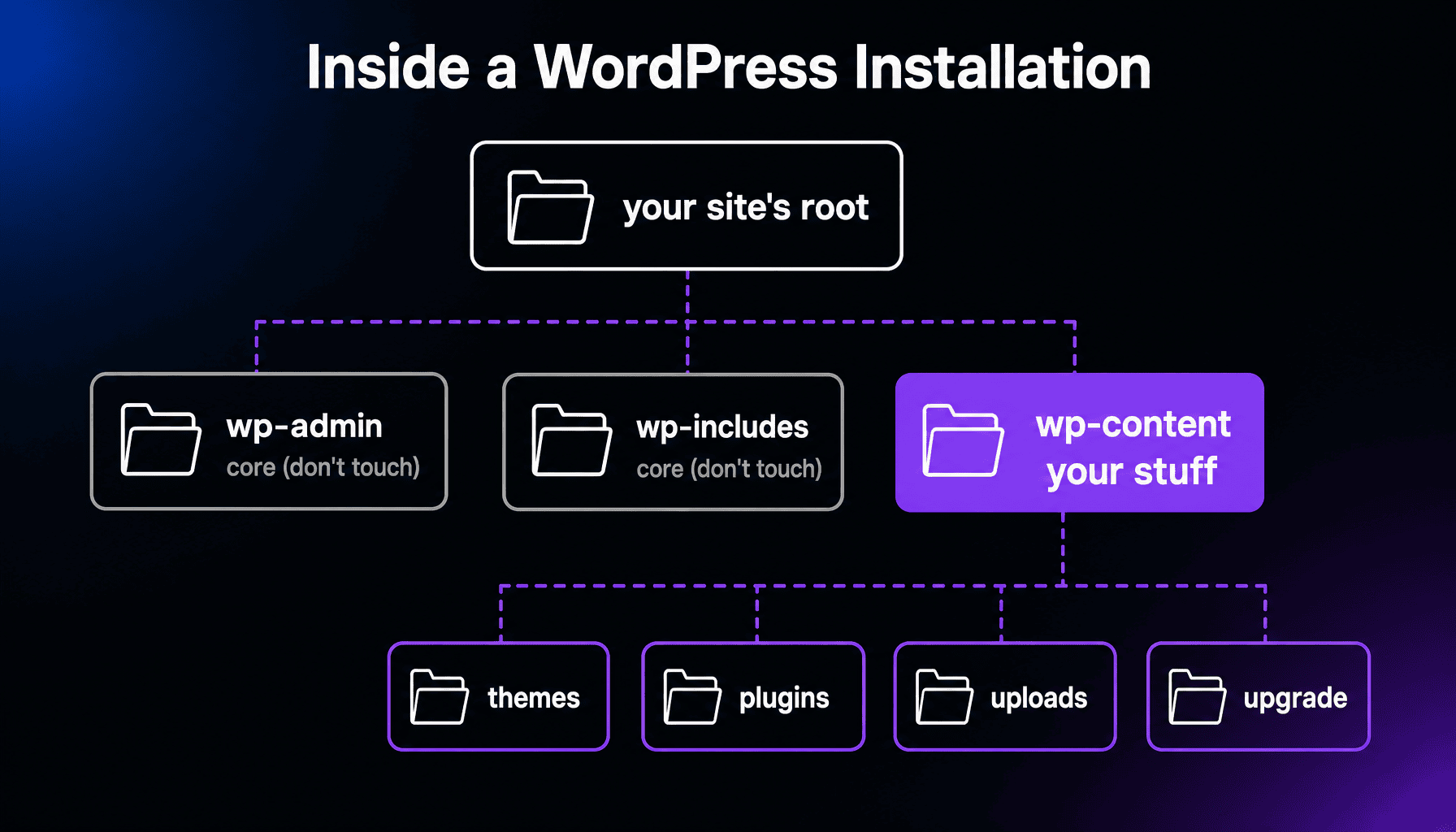
Every WordPress site has the same three folders at its root: wp-admin and wp-includes, which hold WordPress core code you should never edit, and wp-content, which holds your stuff. When you install a theme or upload an image to the media library, WordPress files it under wp-content.
What’s inside the wp-content folder?
You’ll almost always find these four subfolders, though exact contents vary by site:
- themes. Every theme installed on your site, active or not, with one subfolder each.
- plugins. Same idea: one subfolder per installed plugin.
- uploads. Your media library: images, videos, and documents, organized into year and month folders by default.
- upgrade. A temporary workspace WordPress uses during updates.
Plugins often add their own folders too, such as caches and backups. You may also see a languages folder, where WordPress stores translations, and a mu-plugins folder for “must-use” plugins that load automatically and can’t be deactivated from the dashboard.
Where is the wp-content folder?
In your site’s root directory, wherever WordPress is installed, alongside wp-admin, wp-includes, and files like wp-config.php. You won’t see it from the WordPress dashboard. To browse it, connect with SFTP or use the file manager in your hosting control panel. The root folder’s name varies by host: it’s often your domain name, or a generic name like public_html.
Is it safe to change files in wp-content?
Yes, with care. Careful edits are normal — child theme files live here, for example — but mistakes here are the classic cause of the WordPress “white screen of death.” You can disable a broken plugin by renaming its folder inside wp-content/plugins, a standard rescue trick. Two rules keep you safe: back up before touching anything, and never edit wp-admin or wp-includes at all, since updates overwrite them.
Frequently Asked Questions
Can I rename or move the wp-content folder?
Yes, but it’s rarely worth it. WordPress lets you set a custom location with the WP_CONTENT_DIR and WP_CONTENT_URL constants in wp-config.php, but some poorly coded plugins hardcode the default path and break. Unless you have a specific reason, leave it alone.
Why does WordPress say it’s unable to create a directory in wp-content/uploads?
That error means WordPress lacks permission to write to the uploads folder, and it usually appears after a migration. Fix it by correcting the folder’s permissions (typically 755) over SFTP, or ask your host’s support. Also check Settings > Media for an old server path left behind.
Can I delete things inside wp-content to free up space?
Only with care. Inactive themes and plugins are safest to remove from the dashboard, not by deleting folders. Never delete uploads: that’s your media library. Old backup and cache folders left by removed plugins are usually safe once you’ve confirmed the plugin is gone.
Why don’t WordPress updates delete my themes and plugins?
Because updates only replace the core folders (wp-admin, wp-includes, and the root files) and don’t overwrite what you’ve added to wp-content. At most, a major update drops in a new default theme. That separation means everything you’ve installed survives every upgrade.