What is an Algorithm Update?
An algorithm update is a change a search engine makes to the systems that rank its search results. Google ships thousands of these changes every year, most of them invisible, plus a few large core updates that can noticeably shift which pages rank well and which lose traffic.
More About Algorithm Updates
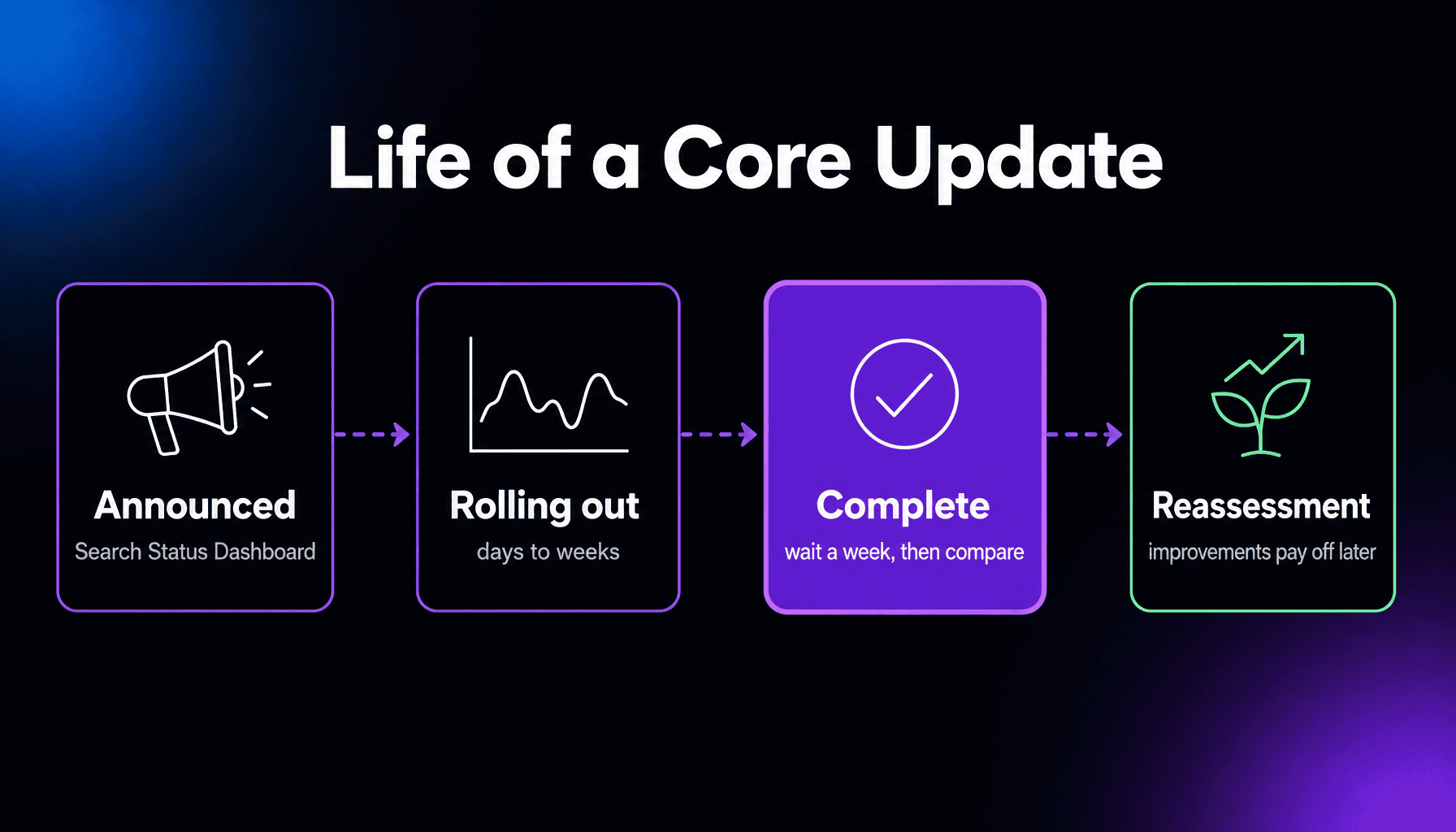
Search results are ordered by ranking systems, and those systems never sit still. Most updates pass unnoticed; the big ones get names. A confirmed update moves through the cycle in the diagram above: Google changes how a signal is weighed or how spam is caught, rankings shuffle while the change rolls out, and site owners measure the difference afterward.
What do algorithm updates actually change?
Algorithm updates change how the ranking recipe weighs its ingredients. An update might strengthen a quality signal, get better at catching spam, or add a whole new ranking system. The famous ones each targeted something specific: Panda went after thin content, Penguin after link spam, and BERT changed how Google understands the language of a query. Panda and Penguin have since been folded into Google’s core ranking systems, while BERT still runs as one of its active systems.
Core updates vs. everyday changes
The everyday changes are small experiments that launch quietly. A core update is different: a broad revision to Google’s main ranking systems, announced on its Search Status Dashboard, rolled out over days to weeks, and felt across many sites at once. When people in SEO say “an update hit,” they almost always mean a core update.
What should you do after an algorithm update?
First, confirm the update actually caused the change: check the Search Status Dashboard for the rollout’s start and end dates, wait at least a week after it finishes, then compare your traffic in Google Search Console against the week before the rollout began. If you did lose ground, Google’s advice is to make the content genuinely more helpful; quick technical fixes rarely reverse a core-update drop.
Frequently Asked Questions
How often does Google release algorithm updates?
Google makes thousands of small ranking changes a year, several per day on average. Large core updates are much rarer, typically a handful per year, and each one takes time to finish rather than landing all at once.
How do I know if an algorithm update hit my site?
Look for a drop that begins mid-rollout and affects many pages at once; that points to the update, while a single page slipping usually doesn't. Google's Search Status Dashboard lists each confirmed update's start and end dates so you can line up the timing.
Can a site recover from an algorithm update?
Yes. Google says improvements can show up within days, though a site-wide reassessment can take months, and sometimes the full effect waits for a future update. Smaller unannounced updates roll out continually, so improved content can regain ground between the named ones.
Do algorithm updates only happen at Google?
No. Bing and other search engines ship them too, and social feeds and AI assistants tune their ranking systems the same way, though the term usually refers to search. Google's updates get the names and headlines because most search traffic depends on them.