What is a Domain Portfolio?
A domain portfolio is the collection of domain names one person or company owns, managed as a group. Portfolios come in two main kinds: defensive ones, where a business registers variations of its brand to protect it, and investment ones, where domains are held as assets to resell.
More About Domain Portfolios
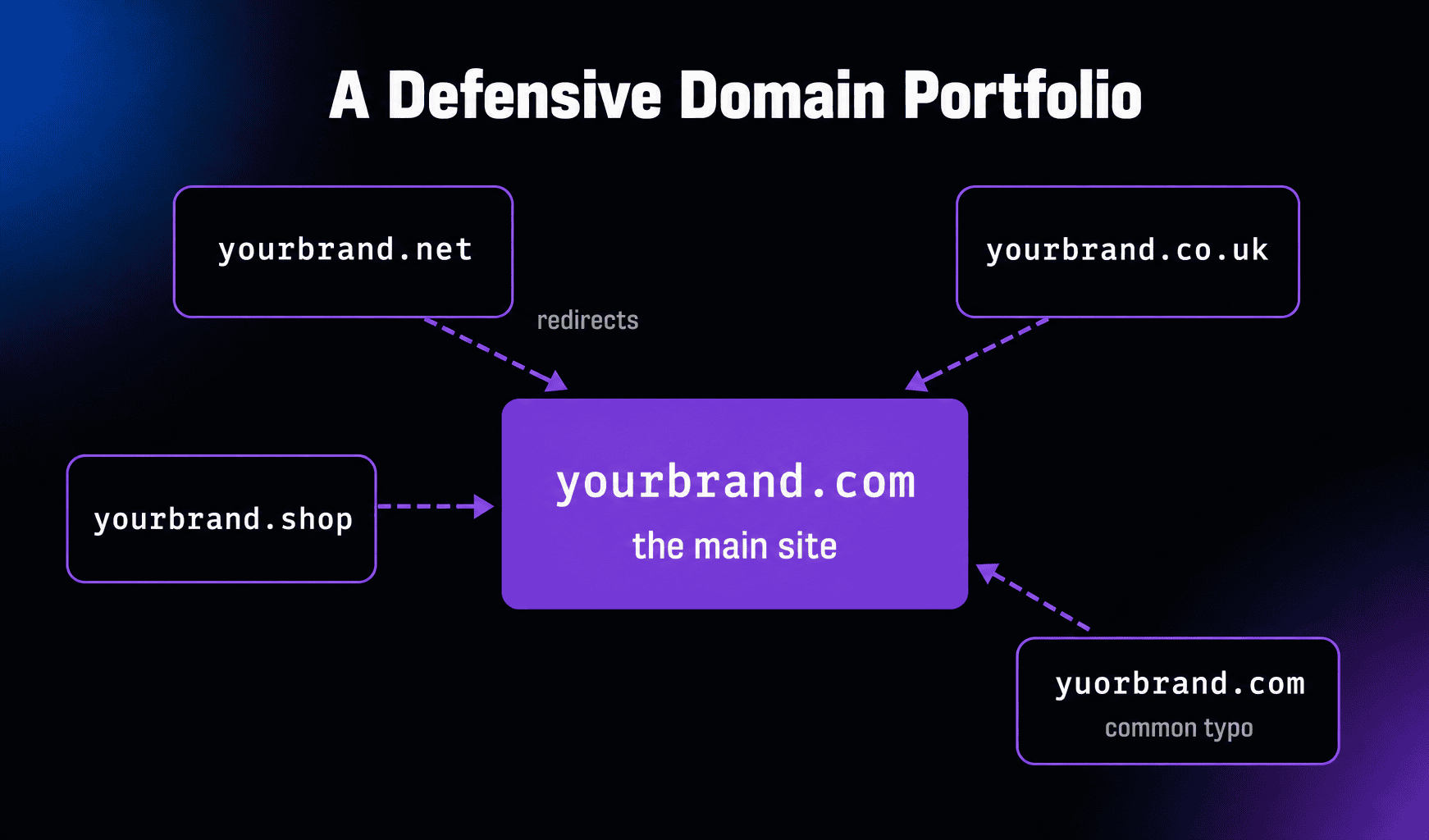
Many portfolios exist to protect a single name: the diagram above shows a typical one, with every variation pointing back at the main site. Others are operational, covering a company’s product brands and campaign sites, and the rest belong to investors, who hold names the way others hold stocks.
Why do companies keep domain portfolios?
So nobody else can use their name against them. A typical defensive portfolio covers the main domain plus common extensions, the country extensions where the business operates, and the most likely misspellings, all redirecting to the primary site. That keeps confused visitors landing in the right place and denies phishers and typosquatters their easiest raw material.
What do domain investors keep in a portfolio?
Names they expect someone to want: short ones, common words, brandable coinages, and keyword domains in commercial niches. The economics are unforgiving, since every name costs a renewal fee for each year you hold it while only a small fraction of any portfolio sells in a given year. Serious investors track acquisition cost, renewal load, and inquiries per name, and cull the names nobody asks about.
How do you manage a domain portfolio?
Like recurring bills, because that’s what it is. Keep every domain at one registrar so nothing hides, turn on auto-renew with a current payment method, use one set of contact details, and review the list once a year: renew what serves the brand or draws offers, and let the rest expire. A portfolio that’s never audited quietly becomes a subscription to names nobody remembers buying.
Frequently Asked Questions
How many domains count as a portfolio?
There's no threshold. Two domains managed together are already a portfolio, a small business protecting its brand might hold five to twenty, and large corporations and professional investors run portfolios in the thousands. The word describes how the domains are treated, as one managed set, not a quantity.
Is a domain portfolio a good investment?
It can be, but it's a business, not passive income. Values are guesses until a buyer appears, so get names appraised and count carrying costs before counting profits.
Should my business register misspellings of its domain?
The plausible ones, yes. Cover the typos a customer could realistically make and stop there; you can't buy every variation. Trademark rights give you a way to recover the worst offenders, and monitoring catches them early.
What's the difference between a domain portfolio and domain flipping?
A portfolio is what you hold; flipping is a way to trade it. Domain flipping means buying names to resell at a markup, while a portfolio can also exist purely for brand defense, with no intention of ever selling anything.